Bethesda's Purple Line Has Two Timelines. Only One of Them Matters This Year.
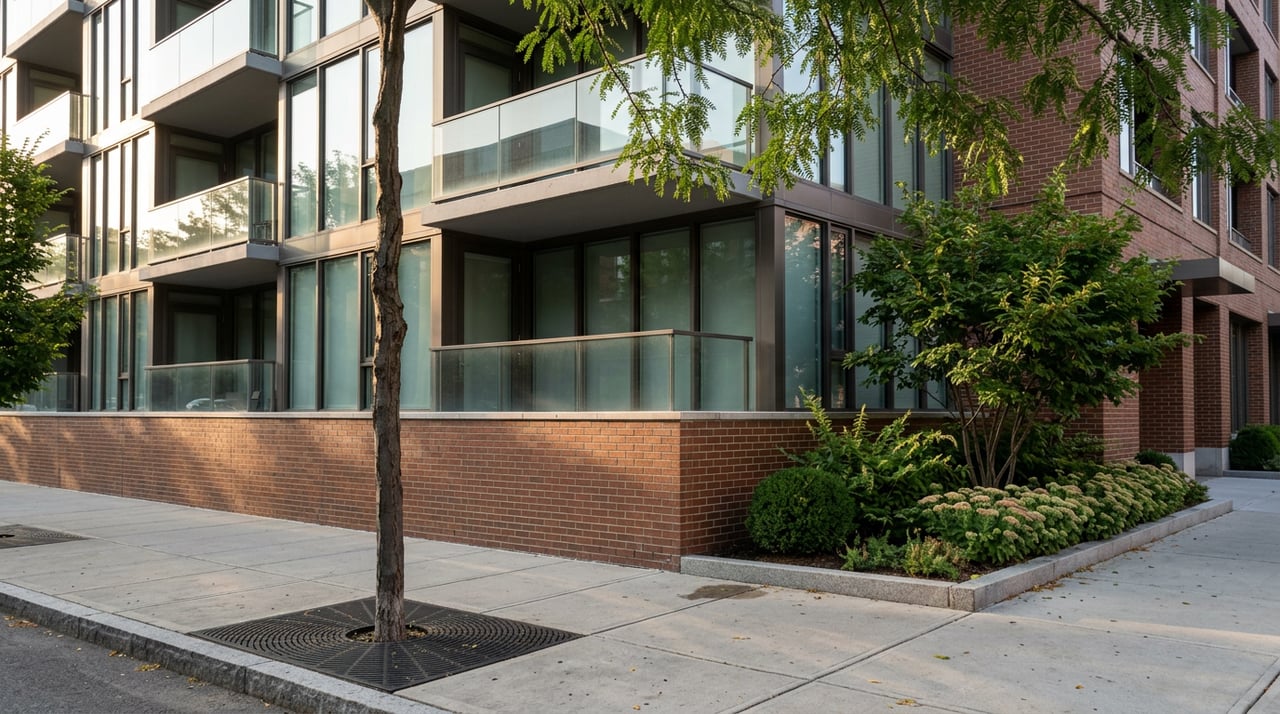
Walk through a handful of downtown Bethesda listings this summer and you'll notice the same phrase doing double duty. "Steps from the Purple Line" shows up on a unit near the future Bethesda Station platform. It also shows up, verbatim, on a unit three blocks away that's actually close to the Capital Crescent Trail. Buyers touring both assume they're weighing the same amenity twice. They aren't. One of those things reopens to the public within the next several months. The other won't carry a single paying rider until late 2027. Conflating them is the single most common mistake we see buyers make when a listing mentions the Purple Line, and it's worth untangling before you let either phrase move your offer.
The Purple Line is a 16-mile light rail line connecting Bethesda to New Carrollton, and as of early 2026 Maryland transit officials put the project at somewhere between 87 and 90 percent complete, with Bethesda Magazine reporting that testing was intensifying ahead of a targeted late 2027 launch of passenger service. That's the train. It runs on new track, needs new signal systems, and by law has to spend more than a year in testing before it can carry a single commuter.
The Capital Crescent Trail is a different animal entirely. The Bethesda-to-Silver Spring stretch has been closed since 2017 so Purple Line construction crews could use the corridor, and its replacement is a 12-foot paved path with 2-foot buffers on either side, a real upgrade from the old crushed-gravel surface. That trail segment is expected back in public use well before the train runs, likely sometime between late spring and fall of 2026 based on the most recent state reporting.
Here's the part that should make any buyer pause. Even the trail's own reopening date has already moved twice this year. A May 2024 Bethesda Magazine report had it penciled in for spring 2026, a year ahead of the original schedule at the time. By January 2026, the state's own report to the legislature had pushed that to summer, citing design changes to grading and drainage. The most recent update on record moves it again, to fall 2026, and even that excludes the trail's own tunnel under Wisconsin Avenue, which Montgomery County has left out of its capital budget three cycles running because the county council hasn't had the votes to fund it as its price climbed from $55 million to $82 million. So even the amenity that's supposedly "almost here" keeps arriving a season later than the last update promised. That's not a reason to write the trail off. It's a reason to treat every date attached to this corridor, trail or train, as directional rather than fixed.
If you want to understand why this project keeps slipping, you don't need a transportation engineering degree. You need one figure. A March 2025 report from the Maryland comptroller's office found that permitting and legal fees for the Purple Line, originally budgeted at $6 million, had actually consumed roughly $800 million, the result of two lawsuits and a full contractor renegotiation. The overall project has grown from an initial $5.6 billion budget in 2016 to somewhere near $10 billion today, and the opening date has slid from an original March 2022 target to late 2027, more than five years behind schedule.
That history matters for how you should read any listing copy that leans on "future transit access" as a selling point. A rail line with this track record on dates is not a project where you discount the future value lightly, because the future itself keeps arriving later than promised. The trail, being a simpler paving and grading job rather than a signal-tested rail system, is a shorter and more trustworthy bet, but even it isn't immune, as its own spring-to-summer-to-fall slide shows.
As of this summer, testing has moved to the Bethesda end of the line specifically. Live-wire testing began in July 2026 on the 2.5-mile segment between the Lyttonsville Operations and Maintenance Facility and Bethesda Station itself, the fourth of seven planned test segments, with all 16 miles of track and more than 1,100 overhead wire poles already installed. In May 2026, Governor Wes Moore marked the completion of the final rail installation on the line, a milestone that shifts the remaining work toward finishing station structural elements, signal controls, and landscaping through the rest of the year.
Construction disruption has real costs for the businesses along the corridor, and the state has acknowledged as much. The Purple Line Small Business Grant program has awarded $2.6 million to nearly 250 local businesses affected by construction, with a first 2026 round of $600,000 going to 60 businesses across Prince George's and Montgomery counties. During his visit marking the final rail milestone, Governor Moore stopped at Max's Best Ice Cream in Bethesda, a shop founded by Cory Alexander and his son Max and co-owned with Best Buddies International, a small but telling sign of how directly this construction touches the daily commercial fabric of the neighborhood you'd be buying into.
Here's the detail that tells you where sophisticated capital is placing its chips. A proposed redevelopment near downtown Bethesda, a residential tower reaching up to 302 feet with as many as 420 homes, sits about a block from both the future Purple Line station and the Capital Crescent Trail corridor. Montgomery Planning staff recommended approval with conditions ahead of a Planning Board hearing held in late July 2026, and the project's design caps structured parking at just 269 spaces, fewer spaces than homes. That parking ratio is a bet on walkability and trail access happening now, not a bet on train ridership that won't exist until 2027 at the earliest. Developers underwriting a project today aren't pricing in the light rail premium. They're pricing in the trail, the existing Red Line stop, and downtown Bethesda's walk score, all of which are already real.
That's the pattern worth internalizing. The amenity that touches your actual daily life, a rebuilt trail you can walk or bike on, arrives on a shorter and more trustworthy timeline than the one that touches your commute. Price the first one into your decision now. Treat the second one as a longer-term upside, not a reason to pay more today.
None of this means Bethesda needs a Purple Line story to justify its pricing. Over the three months ending in May 2026, Bethesda's median sale price ran about $1.3 million, up 3.1 percent from the same period a year earlier, with homes averaging 19 days on market compared to 22 days the year before, and May alone saw 243 homes sold, up from 195 in the same month a year prior. At the same time, price per square foot actually dipped slightly year over year, which suggests the market's strength is concentrated in certain property types and price points rather than lifting every listing uniformly. That's a useful check against any pitch that treats Purple Line proximity as an automatic multiplier. The fundamentals here, schools, walkability, an existing Red Line stop, are already doing most of the work.
If you're actively looking at a home or condo along the Bethesda side of this route, a few questions will tell you more than any listing description:
Two clocks are running on this corridor, and they're not set to the same time. The trail is the nearer one, worth real weight in a decision you're making this year. The train is still more than a year out, with a track record that counsels patience rather than urgency. Knowing which one a listing is actually describing is the difference between paying for something you're getting now and paying for something you're still waiting on.
If you're weighing a home near the Purple Line corridor, whether that's downtown Bethesda, Chevy Chase, or a bit further along toward Silver Spring, we'd rather walk the specific block with you than let listing language do the talking. Reach out to The Tom Buerger Team and let's look at what's actually finished, what's still years out, and what that means for the number you put on an offer.
Stay up to date on the latest real estate trends.


The Difference Between Wanting a Home and Being Ready to Win One: Pre-Approval in the D.C. Market.

First Impressions Move Buyers: The Details Buyers Notice First When Touring a D.C.-Area Home.

Smart Upgrades That Lower Bills and Raise Comfort in D.C. Homes.
Turn Your Outdoor Space in D.C. Into the Best Seat in the House.

Turning a Dense Document Into Clear Decisions: How Buyers Should Read a Home Inspection Report in Washington, D.C.