In National Landing, Crystal City's Metro Entrance Advances as Amazon's HQ2 Timeline Remains Unclear
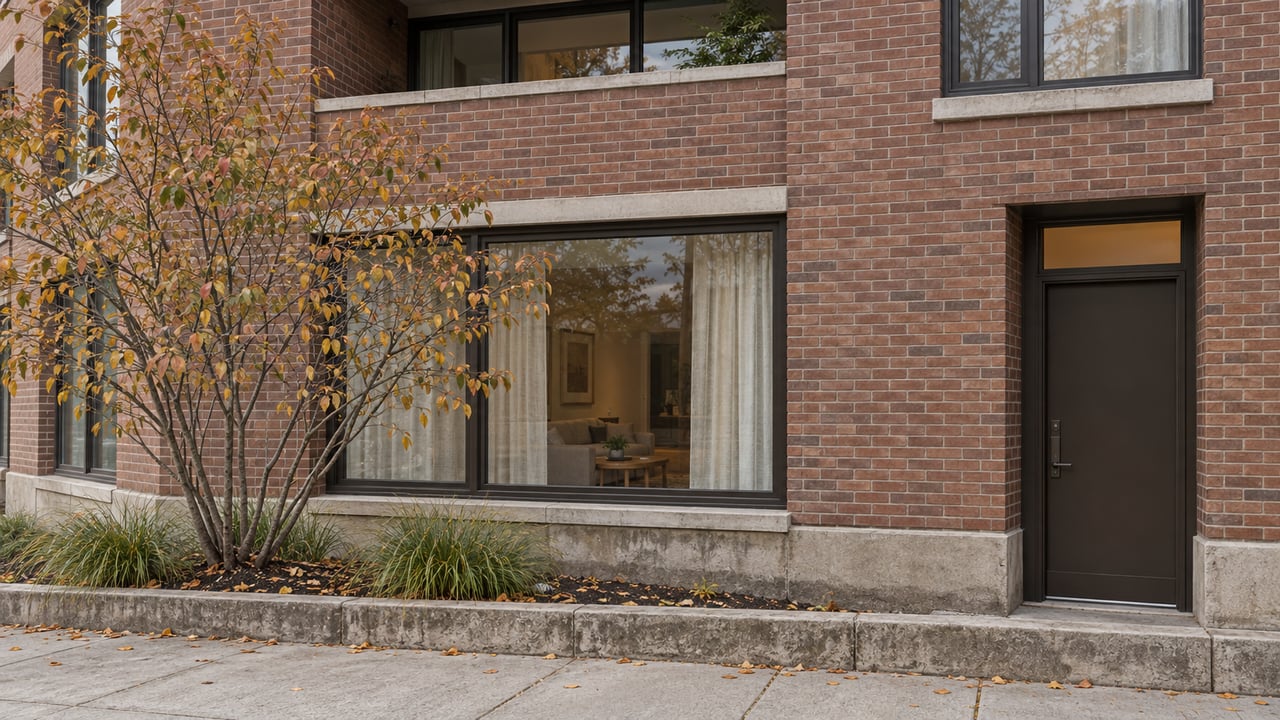
For years, the pitch on National Landing came down to one word: Amazon. Buy near HQ2, the thinking went, and a wave of high-salary tech hires would push prices higher on a predictable schedule. In 2026, that timeline quietly split in two. The Amazon side stalled. A separate, less glamorous project reached a key construction milestone, though Crystal City's second Metro entrance itself is expected to open in 2027.
Drive past the 11-acre PenPlace site in Pentagon City and you'll find it exactly where it's been for a while: fenced, empty, waiting. This is supposed to be the second phase of Amazon's headquarters, the one that includes the Helix, a 350-foot spiral glass structure the county approved back in April 2022. Construction on that phase is paused indefinitely. Amazon's own position, as described in the company's public filings, is that it currently has enough office space for its needs at the completed first phase, Metropolitan Park, which opened in June 2023 with capacity for 14,000 workers.
With no clear restart date, Amazon has reportedly been exploring temporary uses for the vacant block: open green space, rotating art installations, even a pop-up dog park. None of that sets a restart date. Amazon has said its long-term plans for HQ2 remain unchanged, so the pause describes timing rather than a cancellation, and buyers are left weighing a building schedule that has no published start.
The jobs side of the story is where the gap between narrative and filing becomes concrete. Virginia's incentive deal with Amazon pays the company $22,000 for every qualifying HQ2 job that pays more than $164,000 a year, as of 2026, provided the position is newly created rather than transferred. That structure was designed to make hiring self-verifying: Amazon only gets paid when the jobs actually show up in a form the state can count.
They haven't been showing up. Amazon added 293 qualifying jobs in 2024. In 2025, it added zero, and asked for no state grant money at all that year. Company filings put total qualifying HQ2 employment at 7,159 at the end of 2025, down from 7,232 the year before, a net loss of 73 positions against an incentive agreement that had projected more than 1,600 new hires for that year alone.
| Projected for 2025 | Actual, year-end 2025 | |
|---|---|---|
| New qualifying jobs | ~1,643 | 0 new; 73 net decline |
| Cumulative qualifying jobs | — | 7,159 |
| State subsidy requested | Per job created | $0 |
Since the original 2019 deal was signed, in exchange for as much as $750 million in potential public subsidies, Amazon has actually collected just $81,745 total, and that payment came from a hotel-tax formula rather than job creation. Amazon's own confidence language for hitting its long-stated goal of 25,000 workers by 2038 has shifted from high to moderate, the first time the company has used that word in its filings.
None of this means Amazon is leaving. The company still employs thousands of people at Metropolitan Park and has roughly 500 open roles tied to HQ2 according to a spokesperson. But the incentive mechanism that was supposed to translate corporate presence into verified housing demand hasn't been paying out, and buyers who priced in a jobs surge on the old timeline are pricing in a number the filings don't support.
While PenPlace sat fenced, Metro was finishing something with no connection to Amazon at all. Crystal City's second station entrance, a project running independently through Arlington County's own capital plan, wrapped its disruptive weekend construction two weeks ahead of schedule in June 2026. Tunnel work inside the station is done. Weekend shuttle-bus substitutions ended. What's left is pavilion, elevator, and finishing work above and below ground, with the new entrance expected to open sometime in 2027, per Metro's own project updates.
The planned entrance is at 18th Street South and Crystal Drive, on the east end of the existing station, and will include a full above-ground lobby with faregates, fare machines, and a staffed kiosk, plus elevator upgrades expected to bring the station closer to full ADA compliance. It is expected to improve the walk from Crystal Drive, the VRE station, and the Metroway bus line, and to function as a second emergency exit for a station Arlington describes as one of its most heavily used.
This project doesn't depend on Amazon hitting a hiring number or restarting the Helix. It's funded, it's finishing, and it changes actual walk times and station capacity for anyone in the surrounding blocks starting next year.
Arlington Magazine's reporting on ZIP code 22202, which covers Crystal City, Pentagon City, Arlington Ridge, Aurora Hills, and the Arlington slice of Potomac Yard, put the average home price there at $734,000 in 2023, down slightly from $743,000 in 2022, but still well above the $507,000 average recorded in 2017, before Amazon's HQ2 announcement. The big repricing already happened between 2017 and 2022. What's followed since has been closer to flat.
That matters because National Landing's housing stock leans heavily toward condos and apartments, the exact segment where 2026's forecasts are weakest. The Northern Virginia Association of Realtors projects 2026 median-price growth of 3.8% for single-family homes in Arlington County, 1.9% for townhomes, and 2.1% for condos, a modest recovery after condo prices fell 7.4% in 2025. In Alexandria, which contains the Potomac Yard portion of National Landing, the 2026 forecast splits even further: 4.2% for single-family homes, 2.5% for townhomes, and just 1.1% for condos, the softest number in either jurisdiction.
If the jobs surge behind the original HQ2 story were showing up in the data, condos in the corridor built to house Amazon's incoming workforce would be the strongest segment, not the weakest. Instead the segment tied most directly to the promised employment wave is the one with the least pricing power on the board for 2026.
A buyer comparing National Landing to North Arlington, Ballston, or Clarendon is really comparing two different kinds of promise: one that's funded and finishing, and one that depends on a corporate decision nobody outside Amazon controls. A few ways to tell them apart before writing an offer:
None of this argues against buying in National Landing. It argues for pricing the corridor on what's actually funded and finishing rather than on a headquarters expansion still sitting behind a chain-link fence.
If you're weighing a purchase in Crystal City, Pentagon City, or anywhere else along this corridor and want to talk through which parts of the story are locked in and which are still speculative, The Tom Buerger Team can walk through the current numbers with you before you write an offer.
Stay up to date on the latest real estate trends.

Finding Closure and Comfort When Selling Your Longtime Washington, D.C., Home.

Your Guide to a Pet-Friendly Move to Washington, D.C.
Smart Storage Ideas: Making the Most of the Space in Your D.C. Home.
Smart Kitchen Improvements That Elevate D.C. Homes and Win Over Buyers.
Your Year-Round Care Plan for Arlington Real Estate.