In Logan and Dupont, the Condo Building You Pick Now Shapes Your Mortgage
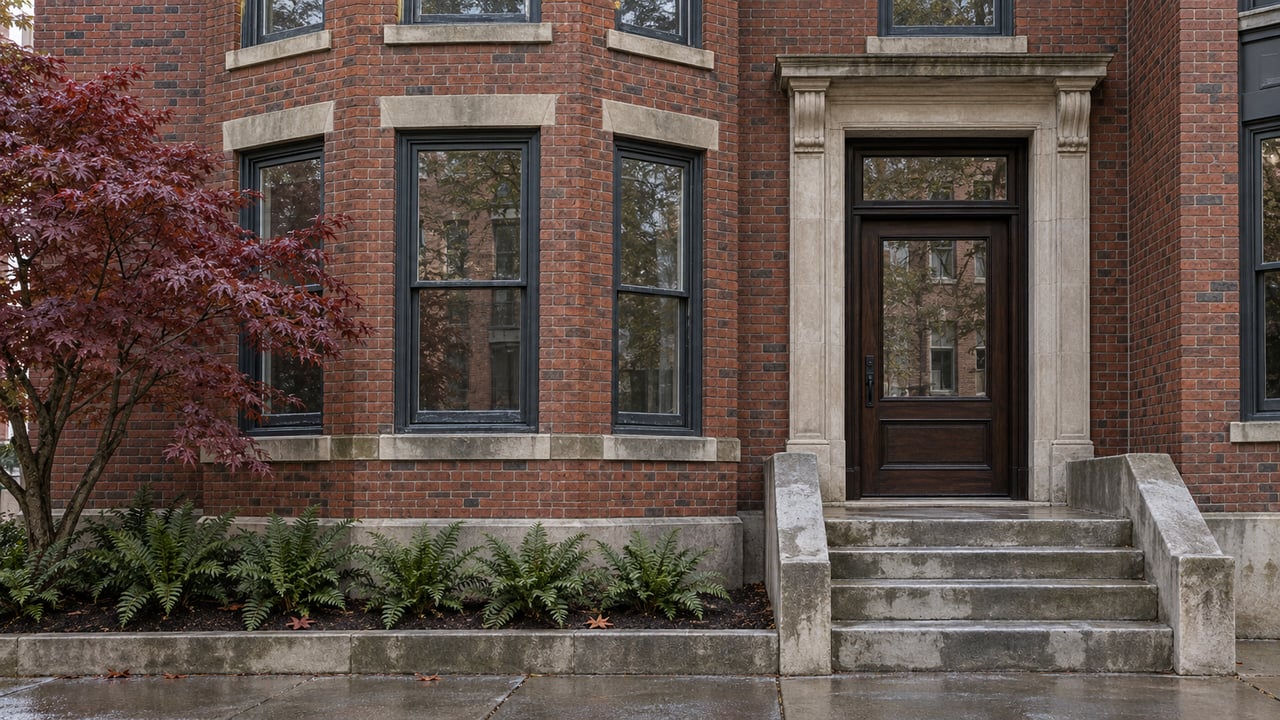
Picture two condos near Logan Circle with the same list price. One sits in a converted rowhouse with a handful of units. The other is in a larger building with a lobby and a management company. If you're financing with a conventional conforming loan, which one is more likely to reach closing on schedule?
Before Aug. 3, 2026, the answer depended mostly on your down payment. Today it depends largely on how many units the building has and how big your loan is. A March 18, 2026 lender letter from Fannie Mae changed that. Freddie Mac adopted matching rules, and the change is now in force for every loan application dated on or after that August date. In Logan Circle and Dupont Circle, where condos are a big share of what's for sale, the rule sorts buyers into three groups. Only one of them got a harder process.
Fannie Mae's Lender Letter LL-2026-03 retired the Limited Review process. Under Limited Review, a buyer with a large enough down payment could get a lighter check of the building. Established buildings that used to qualify for it now go through a Full Review or, if they're small enough, the Waiver of Project Review. As WTOP reported in August, low-risk borrowers used to qualify for Limited Review with 10% to 25% down, depending on occupancy type. Since Aug. 3, every condo with more than 10 units gets a complete financial review for a conventional loan, no matter how much the buyer puts down.
| Your situation | How the building gets reviewed now |
|---|---|
| Conforming conventional loan, building of 10 or fewer units | Eligible for the Waiver of Project Review, which Fannie Mae expanded to new and established projects of this size |
| Conforming conventional loan, established building of more than 10 units | Full Review, unless the building already has an approval in Fannie Mae's Condo Project Manager database |
| Jumbo loan above the DC conforming limit | Outside these rule changes, since Fannie Mae and Freddie Mac don't buy jumbo loans |
The waiver has conditions. A project of five to 10 units can't be part of a master association or larger development. The building can't show an "Unavailable" status in Condo Project Manager, and it has to meet the insurance requirements. The FHFA's 2026 loan limit table puts the one-unit conforming limit for the District of Columbia at $1,249,125. A loan above that amount is a jumbo loan, and these changes don't touch it.
So in Logan and Dupont, the buyers least affected sit at opposite ends of the market. One is a buyer of a unit in a small conversion. The other is a buyer whose loan is too large for Fannie Mae and Freddie Mac. The new friction falls on everyone in between: buyers using a conforming loan to buy into a larger building. That describes much of the first-time and move-up market in these two neighborhoods.
Small buildings make up a large part of the city's condo stock. The D.C. Policy Center counted 16,214 buildings and 79,539 units in its "Condominiums & Conversions" category as of 2024, which works out to fewer than five units per building. That category combines condos with conversions and doesn't count buildings above or below 10 units. Still, it suggests the waiver applies to a lot of DC buildings.
During a Full Review, the lender sends the association or management company a Condominium Project Questionnaire, Fannie Mae's Form 1076. According to the WTOP report, a building can fail when:
A building that fails becomes non-warrantable, and buyers there can't use a conventional conforming loan. The association can fix the problems and try again. A Mortgage Bankers Association spokesperson told WTOP the effect on timing "will likely vary depending on the project, the availability of required documentation, and how readily homeowners associations and property management companies can provide it."
That quote shows where the risk sits. The buyer can be fully qualified and the price can be right, and the deal can still slow down or fall apart over paperwork the buyer doesn't control. EJF Real Estate Services, a DC-area association management firm, describes exactly that: a unit goes under contract, the lender sends the questionnaire, doesn't like the answers, and the deal dies because of the association. The firm also cites a survey by the Community Associations Institute's Foundation for Community Association Research. Of more than 700 board members, managers and business partners, 42% weren't sure whether their community qualified for federally backed financing. Among communities already found ineligible, 64% said it had hurt sales or property values.
There's one way around the repeated paperwork. Once one lender submits a building's documents and Fannie Mae approves the project in Condo Project Manager, every approved lender can see that status, and later sales don't need another review. The National Association of Realtors notes that agents can't see that database unless they officially represent the HOA. In practice, a building's approval status comes from the association, its manager or a lender.
A longer review would matter less if buyers were lining up. They aren't. Bright MLS's September 2026 report for the Washington metro shows condo sales down 16.3% from a year earlier, new pending sales down 18.8%, and active condo listings up 30.3% to 4,891. Supply stood at 4.92 months, and median days on market rose six days to 35. Townhomes moved faster that month, with 2.85 months of supply and a 20-day median. Across all property types, the District had 5.97 months of supply in September 2026.
The Greater Capital Area Association of Realtors reports for DC and Montgomery County combined, so its numbers are close to Logan and Dupont but not specific to them. In September 2026, condos and co-ops in that area sold at an average of 95.6% of original list price after an average of 54 days on market. The ratio of pending contracts to active listings was 48% below its five-year September average. According to UrbanTurf's coverage of the September numbers, Bright attributes the slowdown to higher interest rates, not federal job cuts.
Combine those numbers with the new review rules. When there are fewer buyers per listing, a seller in a larger building whose questionnaire comes back slow or flawed has fewer backup offers. EJF describes the result for buildings that become non-warrantable: buyers face bigger down payments, higher rates and fewer lenders. Sellers cut prices to attract cash buyers, appraisals slip, and because cash sales tend to go to investors, the building shifts toward investor ownership. Fannie Mae's letter also removed the old 50% cap on investor-owned units in Full Review projects, a change NAR says could help demand but adds competition for owner-occupants.
The neighborhood median doesn't show any of this. It blends small conversions, large buildings and jumbo-priced units into one number, even though those buyers now go through three different underwriting processes.
A second change hits during the winter shopping season. For Full Reviews on loan applications dated on or after Jan. 4, 2027, the minimum reserve allocation rises from 10% to 15% of the association's annual budgeted assessment income. NAR calls that 50% increase "problematic." It warns that the short transition window could cause affordability problems for owners and buyers, especially in places already dealing with higher insurance costs and taxes. EJF tells DC-area boards that the higher floor could raise fees at many associations and suggests they review their reserves or get a current reserve study.
That puts two questions on the table for buyers comparing larger Logan and Dupont buildings this fall. Does the building pass today, and does its current budget already meet the January standard? If not, the gap could show up as higher dues or a special assessment. Fannie Mae's own letter links underfunded reserves to that kind of hardship for unit owners.
Sellers in larger buildings can collect these answers before listing and avoid surprises once the lender's questionnaire arrives.
Does this apply to every loan type? These changes come from Fannie Mae and Freddie Mac and cover conventional conforming loans. If you're using a different loan program, ask your lender how it reviews condo buildings.
Do co-ops follow the same rules? No. Fannie Mae treats co-ops separately, and an approved lender decides whether a co-op project is acceptable under its co-op eligibility guidance.
Is a small building automatically easier? It's eligible for the waiver, but the waiver still requires adequate insurance and no "Unavailable" status in Condo Project Manager.
This post is general information about lending rules, not legal or financial advice. Your lender and the right professionals can confirm how these rules apply to your loan and the building you're considering.
If you're comparing condo buildings in Logan Circle or Dupont Circle and want to know how a building's size and paperwork could affect your timeline, The Tom Buerger Team can help you get those answers early, before you're under contract.
Stay up to date on the latest real estate trends.

Your Guide to a Pet-Friendly Move to Washington, D.C.
Smart Storage Ideas: Making the Most of the Space in Your D.C. Home.
Smart Kitchen Improvements That Elevate D.C. Homes and Win Over Buyers.
Your Year-Round Care Plan for Arlington Real Estate.
Your Step-by-Step Guide to Selling Real Estate in Washington, D.C.